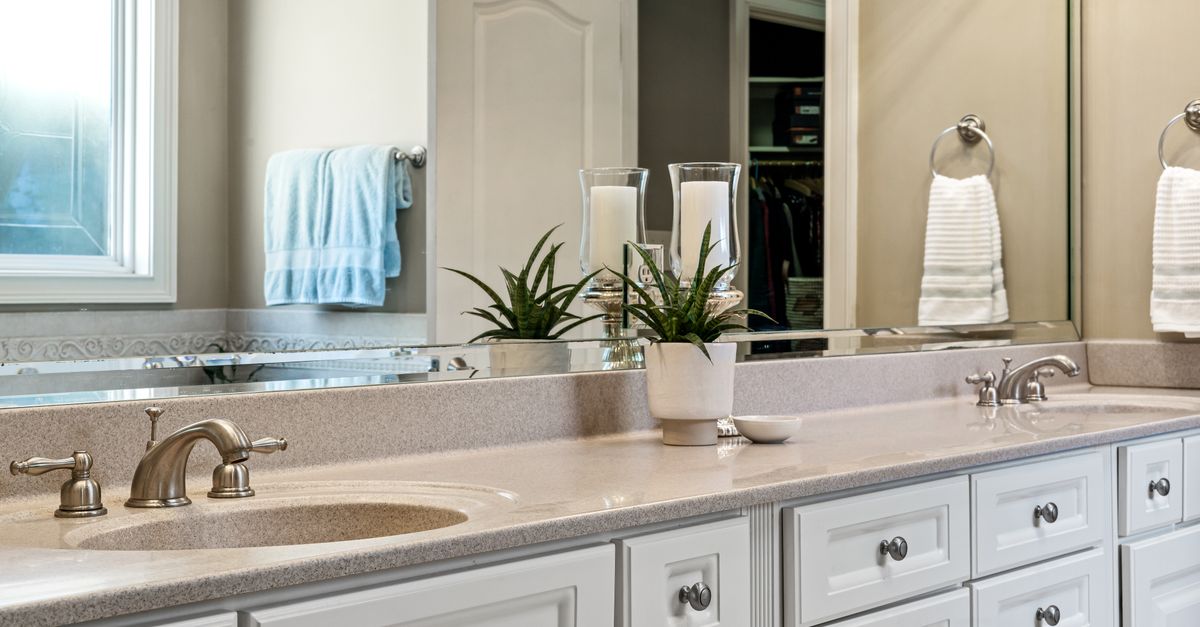
The bathroom vanity. It starts innocently enough: a tube of toothpaste, a couple of brushes, perhaps a lotion. But give it a few weeks, and suddenly you’re wading through a jungle of half-empty bottles, forgotten samples, and precarious stacks of cotton swabs. Finding anything becomes a archaeological dig, and putting things away feels like a game of Jenga you’re destined to lose. If your bathroom vanity looks less like a serene sanctuary and more like a chaotic catch-all, you’re not alone. I’ve seen countless clients struggle with this exact problem, especially in smaller bathrooms where every inch of storage is precious.
For years, I advocated for a one-size-fits-all approach to vanity organization, convinced that a particular product would solve everything. But after years of working with diverse spaces and habits, I’ve realized that the true solution isn’t about a single product, but about understanding the behavior that leads to clutter. Today, we’re pitting two popular solutions head-to-head: open vanity trays and dedicated drawer dividers. Both promise order, but their effectiveness hinges entirely on how you interact with your things.
Key Takeaways
- Open vanity trays work best for frequently used items needing quick access, promoting visibility and ease of retrieval.
- Drawer dividers excel at containing smaller, less aesthetic items, preventing them from shifting and creating hidden clutter.
- The ideal system often combines both, using trays for daily essentials on the counter and dividers for less-used items inside drawers.
- The most effective organization considers your daily habits and how you naturally put things away, rather than a rigid system.
Vanity Trays: Visibility, Accessibility, and the Peril of Overload
Vanity trays, whether for the countertop or within an open shelf, offer immediate appeal. They create a designated ‘landing zone’ for items, grouping them aesthetically and making them easy to grab. In my experience, the biggest benefit of a vanity tray is visibility. If you can see it, you’re more likely to use it, and more likely to put it back.
I once worked with a client who had a small, single-sink vanity with no drawers, just an open shelf underneath. Her struggle was that everything just piled up. She bought a beautiful marble tray, and we used it to house her daily moisturizer, a hand cream, and her perfume. Suddenly, these items weren’t just floating; they had a ‘home.’ The visual cue of the tray told her exactly where they belonged. This worked because the tray imposed a boundary. Once the tray was full, there was no more space, forcing her to be selective.
However, this very strength is also its greatest weakness. The peril of the vanity tray is overload. A tray that starts as a neat display can quickly become a miniature junk drawer on your countertop if you don’t enforce strict limits. I’ve seen trays crammed with everything from hair ties and spare change to three different kinds of toothpaste. When a tray gets overloaded, it loses its aesthetic appeal and its organizational function. It becomes another source of visual noise, defeating the purpose.
Best Use Cases for Vanity Trays:
- Countertop Essentials: Items you reach for daily: hand soap, a specific lotion, a watch, or a small perfume bottle.
- Open Shelving: In a vanity with an open lower shelf, a well-curated tray can group larger items like extra towels or a few stylish toiletries, making the space look intentional rather than just ‘stored.’
- Aesthetic Grouping: If you have beautiful bottles or items you want to display, a tray elevates them and creates a vignette.
My Takeaway: Trays are fantastic for high-traffic, visible items that benefit from being seen and easily accessed. But you must be ruthless about limiting what goes on them. Think of them as curated displays, not catch-alls.
Drawer Dividers: Contained Chaos and the Illusion of Tidiness
Drawer dividers offer an entirely different approach. They work by creating segmented compartments within your vanity drawers, ostensibly giving every item a ‘place.’ The promise is containment: no more items rolling around, no more messy jumbles. For many, the idea of opening a drawer to perfectly sorted sections feels like organizational heaven.
I had a client with a double-sink vanity, each with two deep drawers. She loved the idea of everything being hidden away. We invested in a comprehensive set of adjustable drawer dividers. For a few weeks, it was pristine. Her makeup had its section, hair accessories another, and skincare a third. The problem started when she was in a hurry. Instead of carefully placing the mascara back in its assigned slim slot, it often landed in the wider ‘miscellaneous’ section, or worse, just on top of the dividers. Within a month, the dividers were doing little more than creating obstacles, and the drawer was a mess, just a contained mess.
The illusion of tidiness is a significant pitfall here. Just because items are hidden behind a drawer front doesn’t mean they’re organized. If the dividers don’t align with your natural movements or the size of your items, they become ineffective. They can even make a drawer less functional by creating awkwardly sized pockets that don’t fit anything well, leading to wasted space.
Best Use Cases for Drawer Dividers:
- Small, Loose Items: Bobby pins, hair ties, nail clippers, single-use samples – anything that tends to scatter and get lost.
- Less Frequently Accessed Items: Things you don’t need daily but want to keep neat, like extra toothbrushes, travel-sized toiletries, or a first-aid kit.
- Deep Drawers: These can be a black hole without dividers. Dividers help segment the depth and prevent items from piling on top of each other.
My Takeaway: Drawer dividers are excellent for small, unglamorous items that need to be tamed and contained out of sight. They require a commitment to putting things back in their exact spot. The key is to choose dividers that are adjustable and match the scale of your items, avoiding overly rigid systems that don’t adapt to your actual needs.
The Crucial Factor: Your Habits, Not Just the Hardware
After years of trial and error, I’ve come to believe that the success of any storage solution in a bathroom vanity, or anywhere for that matter, is less about the product itself and more about your daily habits and preferences. Are you a ‘see it to use it’ person, or do you prefer a clean, uncluttered counter at all costs? Do you always put things back meticulously, or are you a ‘toss it in and go’ individual?
Consider what I call the ‘return path’. When you finish brushing your teeth, where does that toothbrush naturally go? If the vanity tray is right there and clearly designated, it might go back there. If you’re opening a drawer and searching for a specific slot for a contact lens case, you’re creating friction. Friction is the enemy of sustained organization. The simpler the return path, the more likely the system will stick.
For most people, the ideal solution is a hybrid approach. I often recommend this to clients:
- Countertop Clarity: Use a single, stylish vanity tray for your absolute daily essentials (hand soap, maybe a face cream, or a small decorative item). This keeps the counter looking tidy and functional without becoming a dumping ground.
- Drawer Discipline: For everything else that needs to be stored, use adjustable drawer dividers. The ‘adjustable’ part is crucial. It allows you to tailor the compartments to the actual items you have, maximizing space and reducing awkward gaps. Start with larger sections and only subdivide if absolutely necessary. Think about grouping by category – all hair products together, all dental items, all makeup.
The goal isn’t just to buy storage. It’s to create a system that actively supports your existing behaviors, or gently guides them toward tidiness, without feeling like a constant battle.
The Under-Sink Cabinet: A Different Beast Entirely
The area under the sink is a whole different ballgame. It’s often deep, dark, and plagued by plumbing pipes, making traditional drawer dividers useless. This space typically becomes a graveyard for cleaning supplies, extra toilet paper, and bulk-sized backup products.
Here, neither the traditional vanity tray nor the typical drawer divider is the star. Instead, I find that pull-out shelves, clear bins, and risers are the undisputed champions. My experience shows that the biggest issue under the sink is lost visibility and accessibility due to depth and obstruction.
One client had an under-sink cabinet that was so deep, she had forgotten about half of what was stored in it. We installed two U-shaped pull-out shelves that worked around the pipes. Suddenly, she could access everything with ease. For her cleaning supplies, we used a tall, clear bin. When she needed to clean, she just pulled out the entire bin, used what she needed, and put it back. No more rummaging, no more forgotten bottles.
Key Strategies for Under-Sink Cabinets:
- Pull-Out Organizers: These are game-changers for deep cabinets, especially U-shaped ones designed to fit around pipes. They bring items to you.
- Clear Bins with Handles: Group similar items (e.g., all window cleaners, all spare soaps). Clear bins allow you to see contents, and handles make retrieval easy.
- Stackable Shelves/Risers: To utilize vertical space, especially if you have tall bottles. This prevents items from being buried.
- Lazy Susans: Excellent for smaller bottles like sprays or polishes, allowing you to spin and access without knocking everything over.
My Takeaway: Under-sink organization is about maximizing vertical space and bringing items forward. Focus on solutions that adapt to the unique challenges of plumbing and depth, prioritizing visibility and easy retrieval over strict compartmentalization.
Your Bathroom, Your Rules: Building a Sustainable System
The most common mistake I see people make is buying beautiful, rigid organizing systems that don’t match their actual lifestyle. They see a picture on a blog of a perfectly organized drawer and try to replicate it, only to find it quickly devolves into chaos. The truth is, your bathroom storage should work for you, not require you to work for it.
Start by observing your own habits. For a week, just pay attention to what you use most often, what gets left out, and where items tend to accumulate. This ‘clutter audit’ will tell you more than any organizing guru ever could. Are you someone who needs to see everything to remember it? Then embrace open trays for your daily routine. Do you prefer a completely clear counter, even if it means opening a drawer multiple times a day? Then invest in high-quality, adjustable drawer dividers.
Ultimately, the ‘best’ system isn’t universal. It’s the one you can realistically maintain without feeling like you’re constantly fighting against it. It’s the one that makes your morning and evening routines just a little bit smoother, a little less frantic, and a little more tidy.
Frequently Asked Questions
How do I stop my vanity tray from becoming a junk collector?
Be extremely selective. Limit items on the tray to your absolute daily essentials – perhaps 3-5 items at most. If a new item comes in, an old one must go. Treat it like a curated display, not an overflow zone.
What if my drawers are too shallow for most dividers?
Look for shallow, stackable acrylic trays that fit inside your drawer. Even a single, low-profile tray can create a boundary for small items, preventing them from scattering. Custom-cut foam inserts can also provide bespoke compartments.
Are custom built-in drawer dividers worth the investment?
For a truly bespoke and lasting solution, yes, if you’re undertaking a full vanity renovation. They offer perfect fit and can maximize every inch. However, high-quality adjustable dividers can achieve similar results for a fraction of the cost, with the added benefit of flexibility if your needs change.
How can I make my under-sink cabinet more hygienic for cleaning supplies?
Use a dedicated, easily removable bin for cleaning supplies. This keeps spills contained and allows you to quickly pull out all products for use and then return them, preventing dust and grime accumulation on individual bottles.
My bathroom has no drawers, just open shelves. What’s the best approach?
Focus on attractive, lidded baskets or decorative bins that fit the shelf dimensions. Use them to group items by category (e.g., hair tools, spare toiletries). Open shelves demand a more aesthetic approach to storage, so choosing visually pleasing containers is key. Combine these with small, curated vanity trays for daily essentials.
How can I make my under-sink cabinet more hygienic for cleaning supplies?
Use a dedicated, easily removable bin for cleaning supplies. This keeps spills contained and allows you to quickly pull out all products for use and then return them, preventing dust and grime accumulation on individual bottles.
My bathroom has no drawers, just open shelves. What’s the best approach?
Focus on attractive, lidded baskets or decorative bins that fit the shelf dimensions. Use them to group items by category (e.g., hair tools, spare toiletries). Open shelves demand a more aesthetic approach to storage, so choosing visually pleasing containers is key. Combine these with small, curated vanity trays for daily essentials.